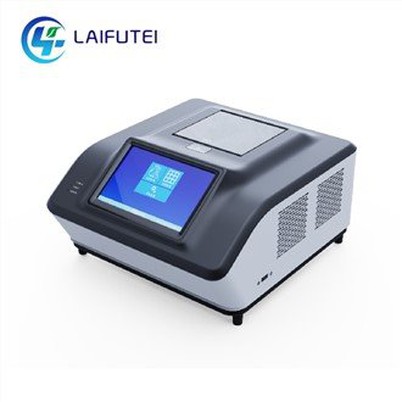
What is the signal - to - noise ratio of Image Scanner CR?
Leave a message

In the realm of animal diagnostic imaging, Image Scanner CR stands as a pivotal device, offering remarkable capabilities in capturing and processing high - quality images. As a dedicated supplier of Image Scanner CR, I am deeply involved in understanding its various technical aspects, and one of the most crucial parameters is the signal - to - noise ratio (SNR).
Understanding the Signal - to - Noise Ratio
The signal - to - noise ratio is a fundamental concept in the field of imaging. In simple terms, the signal represents the useful information in an image, such as the anatomical structures of an animal that we aim to visualize. Noise, on the other hand, is the unwanted random variation in the image that can obscure the details of the signal. A high SNR means that the signal is strong relative to the noise, resulting in a clear and sharp image. Conversely, a low SNR indicates that the noise is prominent, leading to a grainy or blurry image.
For Image Scanner CR, a high SNR is essential for accurate diagnosis. When veterinarians examine the images produced by our Image Scanner CR, they rely on the clarity of the anatomical details to detect diseases, fractures, or other abnormalities. A high - quality image with a good SNR allows them to make more precise diagnoses, which in turn can lead to more effective treatment plans for the animals.
Factors Affecting the SNR of Image Scanner CR
Several factors can influence the signal - to - noise ratio of Image Scanner CR.
Detector Sensitivity
The detector in the Image Scanner CR is responsible for converting the X - ray photons into an electrical signal. A more sensitive detector can capture more of the X - ray photons, which increases the signal strength. At the same time, a well - designed detector can also minimize the generation of noise. Our Image Scanner CR is equipped with a state - of - the - art detector that has high sensitivity and low noise characteristics. This advanced detector technology ensures that a large portion of the X - ray photons are effectively converted into a useful signal, resulting in a higher SNR.
X - ray Exposure Settings
The amount of X - ray exposure also plays a significant role in determining the SNR. If the X - ray exposure is too low, the signal will be weak, and the noise will become more prominent, leading to a low SNR. On the other hand, excessive X - ray exposure can cause overexposure, which may also degrade the image quality and reduce the SNR. Our Image Scanner CR comes with an intelligent exposure control system. This system can automatically adjust the X - ray exposure based on the size and type of the animal being scanned, ensuring that the optimal exposure level is achieved for a high SNR.
Image Processing Algorithms
After the X - ray image is captured by the detector, it undergoes a series of image processing steps. These algorithms can enhance the signal and reduce the noise in the image. Our Image Scanner CR uses advanced image processing algorithms that are specifically designed to improve the SNR. These algorithms can selectively amplify the signal while suppressing the noise, resulting in a clearer and more detailed image.


Comparing SNR with Other Imaging Modalities
In the field of animal diagnostic imaging, there are other imaging modalities such as Animal Digital Dental DR and Animal Imaging Diagnostic CT. Each modality has its own characteristics in terms of SNR.
Animal Digital Dental DR is mainly used for dental imaging in animals. It typically has a relatively high SNR for dental applications because it is designed to focus on a small and well - defined area. However, when it comes to imaging larger anatomical regions, its SNR may not be as high as that of Image Scanner CR, which is more suitable for whole - body or large - area imaging.
Animal Imaging Diagnostic CT, on the other hand, can provide detailed cross - sectional images of the animal's body. CT scanners generally have a high SNR due to their ability to acquire multiple images from different angles and then reconstruct them into a three - dimensional image. However, CT scanners are more expensive and larger in size compared to Image Scanner CR. Image Scanner CR offers a good balance between cost, size, and SNR, making it a popular choice for many veterinary clinics.
Importance of SNR in Veterinary Practice
In veterinary practice, the SNR of the imaging device can have a profound impact on the quality of care provided to animals.
Accurate Diagnosis: As mentioned earlier, a high SNR allows veterinarians to clearly visualize the anatomical details in the image. This is crucial for accurate diagnosis of various diseases and conditions. For example, in the case of bone fractures, a high - SNR image can show the exact location and extent of the fracture, which is essential for determining the appropriate treatment method.
Treatment Planning: Once a diagnosis is made, the SNR of the image can also influence the treatment planning. A clear and detailed image can help veterinarians better understand the condition of the animal's internal organs and tissues, allowing them to develop more effective treatment plans. For instance, in the case of a tumor, a high - SNR image can show the size, shape, and location of the tumor, which is important for deciding whether surgery, chemotherapy, or other treatment options are appropriate.
Monitoring Treatment Progress: During the course of treatment, repeated imaging is often required to monitor the progress of the disease or the effectiveness of the treatment. A high - SNR imaging device like our Image Scanner CR can provide consistent and high - quality images over time, allowing veterinarians to accurately assess the changes in the animal's condition.
Conclusion
The signal - to - noise ratio of Image Scanner CR is a critical factor that determines the quality of the images it produces. Our Image Scanner CR is designed to achieve a high SNR through advanced detector technology, intelligent exposure control, and sophisticated image processing algorithms. Compared to other imaging modalities, it offers a good balance of performance, cost, and size, making it an ideal choice for many veterinary clinics.
If you are a veterinarian or a representative of a veterinary clinic interested in improving the quality of your diagnostic imaging, we invite you to contact us for more information about our Image Scanner CR. Our team of experts is ready to discuss your specific needs and provide you with the best solutions for your practice. We look forward to the opportunity to work with you and contribute to the betterment of animal healthcare.
References
- Bushberg, J. T., Seibert, J. A., Leidholdt, E. M., & Boone, J. M. (2012). The essential physics of medical imaging. Lippincott Williams & Wilkins.
- Fauber, B. J. (2008). Medical imaging physics. Springer Science & Business Media.