What are the emerging trends in animal diagnostic imaging?
Leave a message

In the realm of veterinary medicine, animal diagnostic imaging has emerged as a pivotal tool for accurate disease diagnosis, treatment planning, and overall patient care. As a leading supplier of animal diagnostic imaging equipment, we are at the forefront of witnessing and driving the emerging trends in this dynamic field. These trends not only enhance the capabilities of veterinarians but also improve the quality of life for our furry friends.
1. Advancements in Digital Radiography
Digital radiography (DR) has revolutionized the way veterinary professionals capture and interpret X - ray images. One of the significant trends in this area is the development of higher - resolution detectors. These detectors can capture more detailed images, allowing for the early detection of subtle abnormalities such as small fractures, early - stage tumors, and internal organ changes. For instance, our Animal Digital Dental DR offers high - resolution imaging specifically designed for dental examinations in animals. It enables veterinarians to identify dental caries, periodontal diseases, and other oral health issues with greater precision.
Another trend is the integration of wireless technology in DR systems. Wireless detectors eliminate the need for cumbersome cables, providing greater flexibility in positioning the patient and the detector. This is particularly beneficial when dealing with uncooperative animals or when imaging in confined spaces. The portability of wireless DR systems also allows for on - site imaging, such as in a mobile veterinary clinic or during field research.
2. Growth of Computed Tomography (CT) in Veterinary Medicine
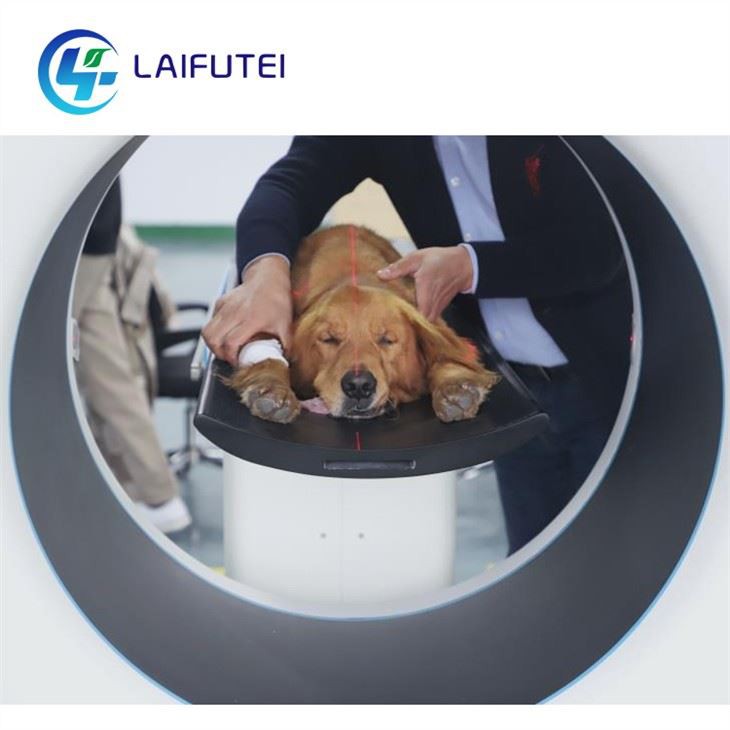
Computed Tomography has become increasingly popular in animal diagnostic imaging. CT scanners can produce cross - sectional images of the body, providing a three - dimensional view of the internal structures. This is invaluable for diagnosing complex conditions, such as brain tumors, spinal cord injuries, and abdominal diseases.
One of the emerging trends in veterinary CT is the development of faster scanning times. Newer CT scanners can complete a scan in a matter of seconds, reducing the need for anesthesia in animals. This is not only safer for the patient but also more convenient for the veterinary team. Our Animal Imaging Diagnostic CT is designed with advanced technology to achieve rapid and high - quality scans.
In addition, the use of contrast agents in CT imaging is becoming more refined. Contrast agents can enhance the visibility of blood vessels, soft tissues, and certain organs, providing more detailed information for diagnosis. Veterinary radiologists are now able to choose from a wider range of contrast agents, each with its own unique properties, to optimize the imaging results for different types of examinations.
3. Expansion of Magnetic Resonance Imaging (MRI)
Magnetic Resonance Imaging is another advanced imaging modality that is seeing increased use in veterinary medicine. MRI uses a strong magnetic field and radio waves to generate detailed images of the body's soft tissues, making it particularly useful for neurological, musculoskeletal, and cardiovascular examinations.
One of the trends in veterinary MRI is the development of open - bore MRI systems. These systems are more comfortable for the animal, as they do not enclose the patient in a narrow tube. This is especially important for larger animals or those that are claustrophobic. Open - bore MRI systems also allow for easier monitoring of the patient during the scan, improving safety and the quality of the imaging process.
Another trend is the improvement in image processing algorithms. Advanced software can now enhance the quality of MRI images, reducing noise and artifacts, and providing more accurate and detailed information. This enables veterinarians to make more precise diagnoses and treatment plans.
4. Point - of - Care Ultrasound
Point - of - care ultrasound has become an essential tool in veterinary practice. It allows veterinarians to perform real - time imaging at the patient's bedside, providing immediate information for diagnosis and treatment.
The trend in point - of - care ultrasound is towards more portable and user - friendly devices. Modern ultrasound machines are now smaller, lighter, and easier to operate, making them accessible to a wider range of veterinary professionals. These devices can be used for a variety of applications, including abdominal, cardiac, and reproductive examinations.
In addition, the development of advanced ultrasound probes is enhancing the capabilities of point - of - care ultrasound. High - frequency probes can provide detailed images of superficial structures, such as the skin, muscles, and joints, while low - frequency probes are better suited for imaging deeper organs.
5. Integration of Artificial Intelligence (AI)
Artificial Intelligence is making significant inroads into animal diagnostic imaging. AI algorithms can analyze large amounts of imaging data in a short period of time, helping veterinarians to detect abnormalities more accurately and efficiently.
One application of AI in veterinary imaging is in image classification. AI systems can be trained to recognize different types of diseases or conditions based on the characteristics of the images. For example, an AI algorithm can be trained to identify the presence of a tumor in a CT or MRI image, providing a preliminary diagnosis for the veterinarian.
Another application is in image segmentation. AI can automatically separate different structures in an image, such as organs, tumors, or blood vessels, making it easier for the veterinarian to measure and analyze the relevant areas. This can improve the accuracy of volume calculations, which is important for monitoring the growth or regression of tumors.
6. Telemedicine and Remote Consultation
Telemedicine is becoming an important aspect of animal diagnostic imaging. With the help of high - speed internet and advanced communication technologies, veterinarians can now share imaging data with specialists in real - time, regardless of their geographical location.
This trend allows for remote consultation, where a specialist can review the imaging studies and provide expert advice to the referring veterinarian. This is particularly useful in rural or underserved areas, where access to specialized veterinary radiologists may be limited. Telemedicine also enables second opinions, which can improve the quality of diagnosis and treatment for the animal.
In addition, telemedicine platforms are being developed to store and manage imaging data securely. These platforms can provide a centralized repository for all the imaging studies of a patient, making it easier for the veterinary team to access and review the history of the patient's condition.
7. Multimodality Imaging
Multimodality imaging, which combines two or more imaging modalities, is becoming more common in veterinary medicine. By using different imaging techniques, veterinarians can obtain a more comprehensive view of the patient's condition.
For example, combining CT and MRI can provide both anatomical and functional information. CT is excellent for visualizing the bones and hard tissues, while MRI is better for soft tissues. By using both modalities, veterinarians can get a more complete picture of a complex disease, such as a spinal cord injury or a brain tumor.

Another example is the combination of ultrasound and nuclear medicine imaging. Ultrasound can provide real - time anatomical information, while nuclear medicine can show the metabolic activity of the tissues. This combination can be useful for diagnosing certain types of cancers or for evaluating the function of organs.
Contact for Procurement
As a leading supplier of animal diagnostic imaging equipment, we are committed to providing the latest and most advanced imaging solutions for veterinary professionals. Our products, including the Animal Imaging Diagnostic CT, Image Scanner CR, and Animal Digital Dental DR, are designed to meet the diverse needs of veterinary clinics, research institutions, and mobile veterinary services.
If you are interested in learning more about our products or would like to discuss your specific imaging requirements, please feel free to contact us. We look forward to partnering with you to enhance the quality of animal diagnostic imaging and improve the health and well - being of animals.
References
- Bush, B. M., & Saunders, J. H. (2019). Textbook of Veterinary Diagnostic Radiology. Elsevier.
- Thrall, D. E., & Robertson, J. S. (2018). Veterinary Radiology and Ultrasound: A Diagnostic Imaging Reference. Lippincott Williams & Wilkins.
- Lamb, C. R., & Adam, A. (2020). Diagnostic Imaging in Small Animal Practice. Wiley - Blackwell.